

Isn’t it interesting how the lessons we learn from Disney films translate to this majestical month of Elul?
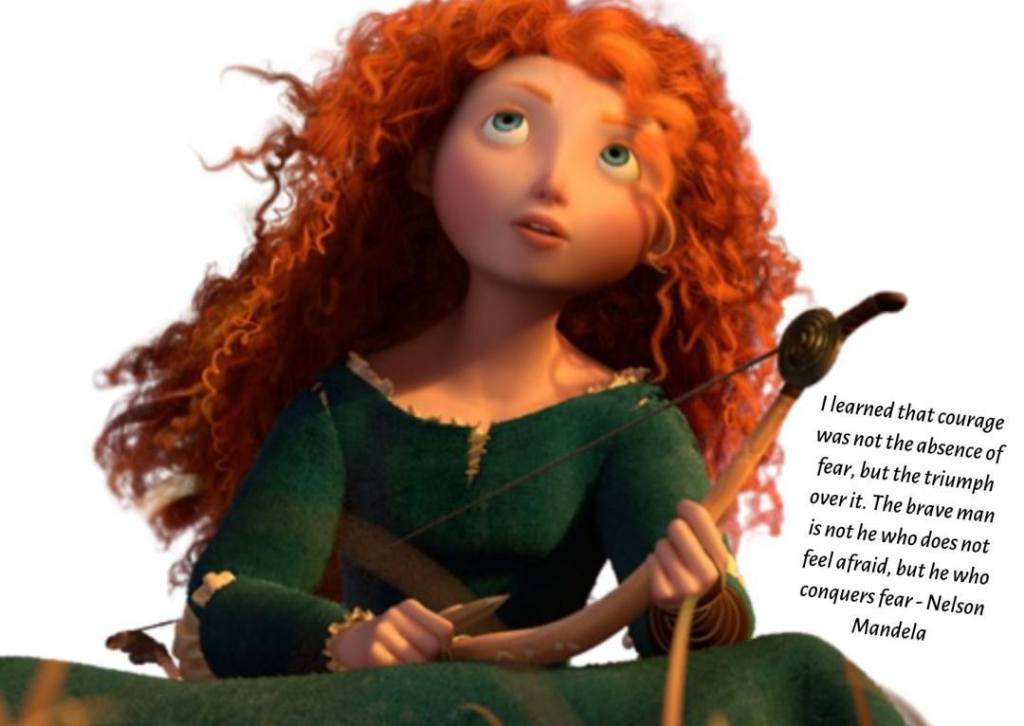
If you’ve ever watched Pixar’s production, Brave, you’re familiar with the fiery Merida. Not only is she a skilled Scottish archer, but she’s also determined to defy age-old customs, refuses to marry a lord from another clan, causes chaos in her kingdom and is determined to change her fate.
Yes, Merida consults a witch for help, and in so doing, her family is cursed with Merida forced to undo the spell and discover what bravery really means.
If only she knew about Elul, and this week’s Parashah, Shoftim.
Let’s dive in.
None Of Us Is Perfect
The Yiddish proverb, “man plans and G-d laughs” is one of my favourites. Pretty much nothing ever goes exactly to plan. And pretty much none of us is perfect. We’re flawed. We’re selfish. We make mistakes. And with that comes pride and stubbornness.
Just ask Merida. The blazing Scott lets her temper get the better of her. She’s easily frustrated. She’s easily angered. Aren’t we all, at times?
Yet, when she reconciles with her mother, Merida must realise that to change her mom from a bear back into a human, she needs to look inside and mend the bond that’s been torn by pride. Once Merida and Queen Elinor communicate their emotions, their bond is strengthened tenfold.
Shoftim is the first portion we read in the month of Elul. It’s the kick-off to the special season spanning the months of Elul and Tishrei, including the days of Judgment and Repentance.
Right at the beginning of the Days of Awe, we’re summoned to take ourselves in hand, to become internal judges over our characters – our pride, our anger, our behaviour – and prepare to face judgment.
By judging and weighing our internal struggles and actions, repenting wrongdoing and making the necessary changes to correct our flaws, we avoid harsh scrutiny from the Divine. G-d leaves matters to human initiative. Merida realises that she needs to go inside and address her pride, and in the same way, those of us who fail to judge ourselves are submitted to the Divine Court’s jurisdiction.

Ditch The Stereotype
Merida is brought up in a stereotypically male-dominant society that holds onto ways of old. Early on in Brave, Merida’s dad, Fergus, brings home a bow and arrow for her birthday. Merida is over the moon and runs straight out to play, while her mom rebukes her dad with the words, “a bow, Fergus? She’s a lady!”
There’s no doubt that Queen Elinor is an authoritative matriarch who wants her daughter to follow in her footsteps, exuding poise and elegance and upholding traditions established by the Scottish forebearers.
Merida is not interested. She desires to be free of ancestorial restraints. She wants to be a woman, yes, but one with a voice and conviction for her causes. This strength paves the way for Merida to ditch the stereotype and be herself – an independent woman and a respected leader.
The first chapter of Maimonides’ Hilchot Deot (the Laws of Character Development) are dedicated to the topic of changing your character and developing the ability to experience feelings. By executing a controlled course of behaviour that goes against the ancestorial grain, you can change your character. You can break free from the chains, just like Merida, to find your voice and ditch the stereotype.
“There are those who say fate is something beyond our command. That destiny is not our own. But I know better. Our fate lives within us. You only have to be brave enough to see it.” – Merida
Change, Through Teshuva, Is Good
Merida comments that “our fate lives in us. You only have to be brave enough to see it.” She also acknowledges that she needs to forge a new path to feel fulfilled and to do so requires both openness and the readiness to change.
Hello, Elul. Hello, teshuva.
Coming to grips with the days of teshuva is scary stuff. It’s one thing to command people to execute actions. It’s another to ask them to experience feelings on demand. G-d hasn’t equipped us with the switch to turn feelings on and off. Experiencing feelings on demand is no easy task.
Yet, Merida is prepared to take risks in her hunt for purpose and freedom. She heads off into the forest alone, following the will-o’-the-wisps, even though her horse warns her not to. She makes a deal with a witch. All of these things she does for better or worse – for change.
And what happens? Merida grows from her experiences. She learns that she can be Scottish royalty and enjoy her freedom. She gains wisdom and the ability to truly listen to those around her. She learns that change is for the better. She becomes humbled.
“I’ve been selfish. I tore a great rift in this kingdom. There’s no one to blame but me. And I know now that I need to amend my mistake and mend our bond.” – Merida
Humility, as Merida shows, doesn’t equate to a lack of self-esteem. In Judaism, humility is the recognition that there are important things in this world beyond your own needs. Humility is perspective. As strong and capable as Merida is, she is a small part of her kingdom. She learns that through change and teshuva – in the sense of returning to something you’ve looked away from – what’s right is far more valuable than serving herself.
As mere mortals, we are not spiritually equipped to effect immediate changes in our characters. Knowing we’re on the wrong track isn’t enough to put us on the right one. Knowledge doesn’t necessarily alter character.
But feelings do.
Love (For Self And Others) Conquers All
Just about every single Disney film ends with the premise that love conquers all. Through all our failures and faults, our need to love and be loved supersedes anything else we can offer.
Love lets us care, listen, understand, grow and change. Without it, we’re merely selfish, prideful beings who fail to see the good in our hearts and in others’.
Teshuva, repentance, has to come from the heart. True repentance requires self-recognition of our faults and a resolve to correct them. It’s not something that we can squeeze into just one Parasha or one particular season. It’s a process. It requires constant attention to gradually change and grow.
Merida’s strength of character and desire to go inward, to change, to grow and to love paves the way for her to find her place. She knows she’s different. She longs for freedom. She craves to chase the wind and touch the sky.
But to do so, she must be strong, loving and brave; and so should we all if we are to love and be loved; to change and create change not just during the Days of Awe, but every single day.
 Nachas & Drash
Wonderful! You have excelled yourself. Shows such growth, love and and deep spiritually xxx
LikeLike