The Long and Winding Road

Parasha Naso is about love – the love between parent and child, partners, and the love between the Divine and His people. This week’s portion is a beautiful reminder that love is the core foundation of our relationships.

But what does love mean? And why are the Kohanim instructed to bestow their priestly benediction “with love?”

What’s love got to do with it, if you will?

Love Me Do

This week, we learn that G-d tells Moses to command the High Priest-Kohen, Aaron and his sons:

…so shall you bless the children of Israel: Say to them, ‘May the Lord bless you and keep you; May the Lord cause His face to shine upon you and be gracious to you; May the Lord lift his Face towards you and grant you peace.’” (Numbers 6:23-27)

The priestly benediction is a regular part of services. Just before they bestow the blessing, the Priest-Kohanim say,

“Blessed are You, O Lord our G-d, King of the Universe, who has sanctified us with the sanctity of Aaron, and commanded us to bestow a blessing upon His nation Israel with love.”

This blessing, combined with the priestly benediction, is a profound expression of divine love and care. It conveys the idea that Hashem is gracious, protective and brings peace, justice and mercy. It encourages love and kindness amongst one another and underscores the significance of fostering harmonious relationships. It’s a reminder to treat others with compassion, respect and love.

I Want to Hold Your Hand

The Beatle’s song, I Want to Hold Your Hand, is all about the anticipation and excitement of being in love – a reminder that sometimes the simplest of things can mean so much.

The simplicity of the blessing – the words and their three, five and seven-word structure, their flow from protection to grace and to peace, make them a gem. This is a prayer that has an unwavering power.

In fact, you’d be hard-pressed to find any other blessing that specifies it be done with love.

The intimacy with G-d and the ability to act as His helper isn’t limited to priests or the elite. Jewish tradition places the sacred blessing in the mouths of every parent as part of weekly practice. But it’s not limited to parents, either.

Think of it like the Righteous Brother’s song, Unchained Melody – like the lyrics of the song, this week’s portion speaks of a love that lasts beyond time and space.

When we bless someone, it demonstrates wanting the best for them.

Is this not what love means?

When Priests bestow blessings, they depict what the love of another looks like. Love is how blessings enter our world, and how we care for others.

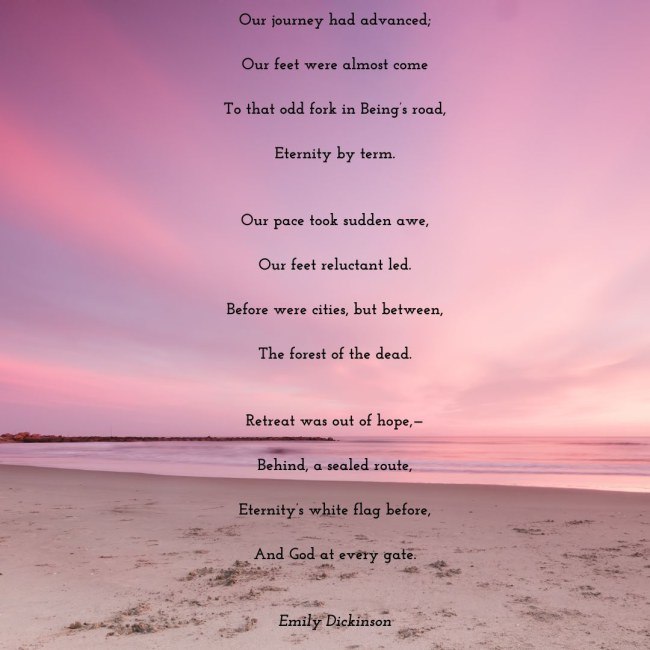
The long and winding road
That leads to your door
Will never disappear
I’ve seen that road before
It always leads me here
Lead me to you door

Long and Winding Road, The Beatles

Love Me Do

Unconditional love is present in Naso, as G-d promises to be there always for the Israelites, even in their weakest moments.

When the Israelites stood at the base of Mt. Sinai awaiting the gift of the Torah, the excitement was nothing short of palpable. Torah, they believed, was a tangible symbol of the Divine’s love. Just the way a parent’s rules establish boundaries, so, too, does G-d’s boundaries help us refine our behaviour to be the best versions of ourselves.

There is an everlasting bond between G-d and the Israelites. Just think about the pertinent principles set out in Torah that we should review regularly:

  • Love the Eternal your G-d (Deuteronomy 6:5)
  • Love those who are different from you (Leviticus 19:34)
  • Love those who are like you (Leviticus 19:18)

Love in the Torah is not an emotion, but rather how we behave. We learn about it from how G-d treats us – with justice (tzedek) and mercy (rachamim). When we act with justice and mercy, then, do we not fulfil the commandment to love the stranger, our fellow and the Eternal?

Give Peace a Chance

Religiously, we’re instructed to act with mercy and justice to everyone – those like us, and those who are not like us. When a person violates that ethic of love, justice must be delivered mercifully. When we violate this ethic, we are to admit our error and set off on a path of bringing justice to the situation.

The commandments to love set out to help us grow. They’re not just for those who show mercy and justice, they’re also for those who don’t love us. It’s up to us to reflect and take responsibility. When we institute mercy and justice in our lives, we give peace a chance.

Do You Want to Know A Secret?

Responsibility and love, as we learn this week, are inextricably intertwined. The Hebrew word, ahavah comes from the Aramaic word for ‘giving.’ Just the way the Priest-Kohanim act as the agent of G-d, attempting to brand the nation with G-d’s love and justice, so, too, are we responsible for spreading the love.

And it starts with you.

The Torah emphasises the importance of mental and physical self-care. By taking care of our body and mind first, we’re better able to fulfil our responsibilities of “love your neighbour as yourself” (Leviticus 19:18) and spreading that love, justice and mercy to our communities. We’re better positioned to love and take responsibility for others, just like Hashem does for us.

All You Need Is Love

Love is the foundation of our relationships. Parasha Naso teaches about the importance of love in several contexts. It teaches us about the importance of commitment and the power of love.

Love is a foundational principle that guides us in leading fulfilling and righteous lives. Sometimes, though, we need a little help from our friends – the Priest-Kohanim – to remind us that we need to trust in G-d and his plan for us.

As we navigate life’s long and winding road, let’s remember the beautiful blessing and ask the Divine to bless us and keep us, to grant us peace and to help us act with justice and mercy. With love.

Shabbat Shalom.
Say Cheese, It’s Shavuot!

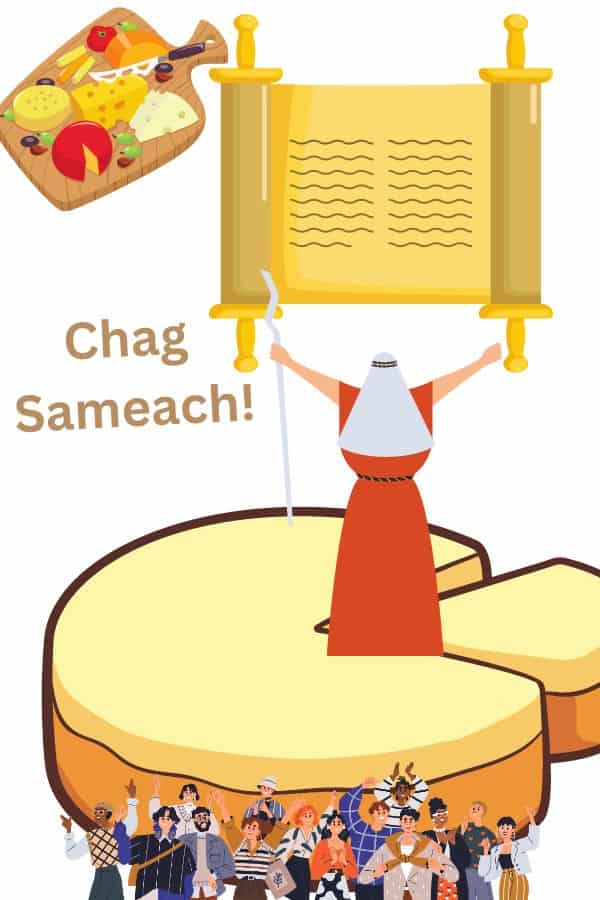
If you know me, you know my favourite meal is a snacky cheese platter. It’s the perfect meld of textures, flavours and aromas. It’s a delicious way to share goodness around a table – it’s reliable, and it’s an opportunity to try new flavours.

It’s also indicative of life, which presents us with an array of experiences and shapes who we are.

Some cheeses are mild and creamy, while others are tangy and sharp. There’s the beautiful marriage of sweet and sour pickles, sweet jams, salty olives and even pungent blue cheese.

Sometimes we don’t know what we’re putting on that cracker, but we’re willing to give it a go.

That’s life for you, peppered with challenges that test our limits, pushing us to grow and try new things. Sometimes it’s hard and sharp, other times it’s as reliable and as comforting as good ol’ gouda.

A cheese platter, come to think of it, is a potent blend of society.

Cut the Cheese!

Why all this cheesy talk? It’s Shavuot this week. In a few days, we’ll gather to commemorate the giving of the Torah on Mount Sinai. It’s a time of reflection, a time to focus on the importance of community and a time to realise just how important community is in our spiritual growth.

The Torah was not presented to a single person but to an entire community. We weren’t designed to live in isolation, but rather to connect with others and build relationships.

As Shavuot approaches, take a moment to reflect on the role community plays in your spirituality. Isn’t it through interactions with others that we learn and grow? Isn’t it when we’re surrounded by others with shared values and beliefs that we challenge ourselves and push beyond our limitations?

Let’s Eat (Cheese)Cake!

Shavuot is a time of gratitude, reflection and tradition. Particularly, the tradition of consuming cheesecake (and other dairy products).

Why has cheesecake become synonymous with Shavuot? There are a few theories. Some say the Torah may be compared to milk, nourishing the soul. Others believe that when the Israelites received the Torah, they were bound by new dietary laws, requiring them to separate meat and dairy. To celebrate, they head straight for the dairy products (I do hope there was a cheese platter).

Regardless of the reason (and lactose tolerance levels), cheesecake is a staple of Shavuot festivities the world over, with countless variations making an appearance over this period.

Cheesecake is versatile. You can add all sorts of flavours and toppings; experiment with different crackers and cookie crusts. Whether you like it baked or straight out of the refrigerator, whether it’s perfectly set or a gloriously tasty flop, cheesecake offers something for everyone.

Sometimes, Community Crumbles

Just like cutting through that first piece of crumbly Roquefort that lands everywhere but where you want it, let’s recognise that community isn’t always smooth sailing. To be an active, invested member, we must be vulnerable, patient and understanding.

It’s through these traits – and sometimes challenges – that we become better versions of ourselves. That it becomes easier to build strong relationships, supporting one another’s spiritual journeys.

Grate, Let’s Devour Dairy

Just like cheesecake has something for everyone, so does a platter of cheese. And so does life. Life has something to offer every one of us. Whether we prefer to try those onion-flavoured crackers with brie and strawberries or stick to the familiar Salitcrax and cheddar, there’s a place for us in this world.

But in the same way some cheeses don’t cut it for our tastebuds, there will be moments in life that we don’t enjoy or that push us out of our comfort zone. It’s these experiences that help us appreciate the good times and build reliance towards the future.

A platter of cheese blends a community of deliciousness, variety and ages. It invokes mouth-watering experiences around bitterness, sweetness, being hard and soft; sticking to the familiar or trying a new taste sensation.

As Shavuot approaches, it’s time for us to come together and celebrate Torah and community. It’s a time to reflect on unity, responsibility and the values of togetherness – the cores of Jewish tradition. By gathering friends, family and community, we strengthen our bonds and deepen our sense of belonging.

Whether it’s through shared meals, prayer or study, Shavuot is the perfect platter for connection and reaffirmation of our commitment to our heritage and one another.

This Shavuot, let’s embrace the platter of cheese that life is and savour every precious bite, be it sharp or mild, comforting or chewy. After all, it’s the variety that makes it worth it – and the people around our table sharing that platter.

May we all be blessed with a fulfilling and meaningful Shavuot.

Like Sands Through the Hourglass, So Does Every Grain Count

Bamidbar

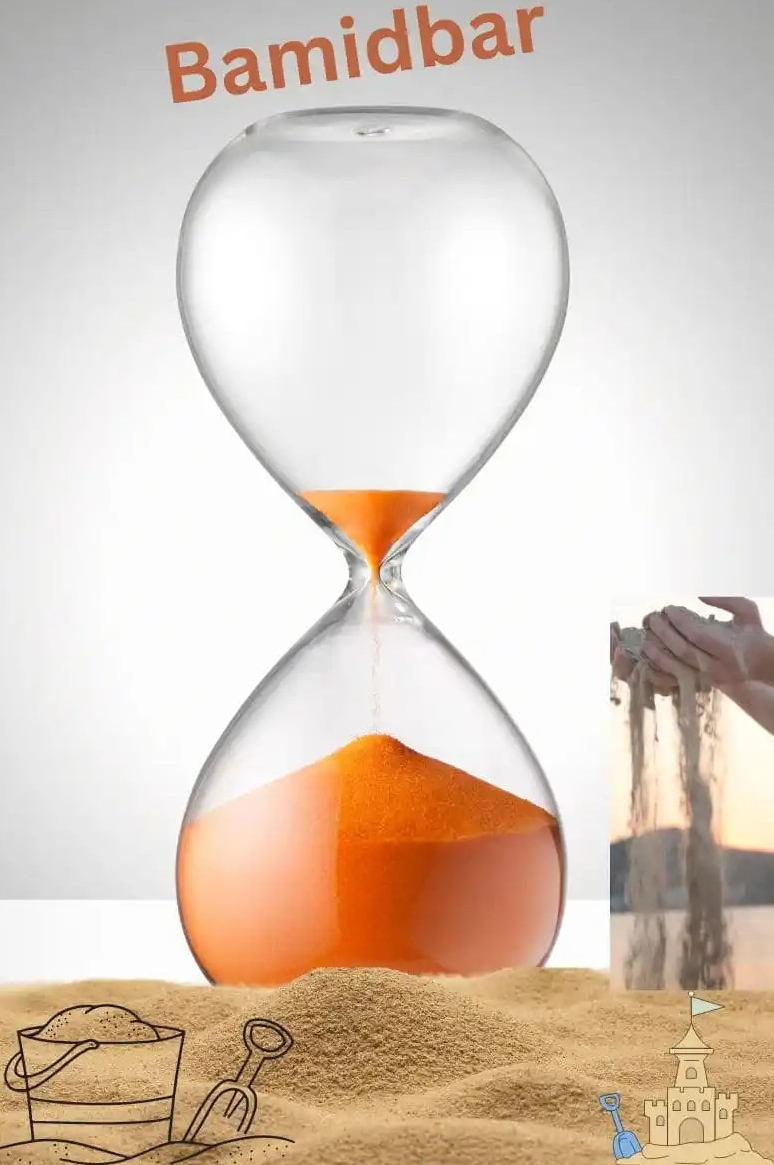
As the saying (and soap opera tagline) goes, “Like sands through the hourglass, so are the days of our lives.” It’s a poetic way of saying that life is short. We know that, though. We don’t need a soap opera tagline to remind us.

Or do we?

Yes, I’m feeling a little philosophical at the moment, and it’s been far too long since I’ve put together some musings on the weekly Parashah. But, this week’s portion, Bamidbar, is resonating loud and clear, fresh off a trip to WUPJ Connections 2023 where over 250 progressive Jews from around the globe congregated to reunite, renew and rejoice. Rather than focus on the passing of time (it had been 6 years since an in-person Conference) the focus was on a cluster of community, united in shared visions.

It was a time of individuals converging to form a powerful force of ideas, conversations and projects. Every individual, like every grain of sand in the hourglass, is unique. Each grain may seem insignificant on its own, but together, the grains form a formidable force that measures time. That measures the moments in our lives. Every decision, every experience, and every action counts towards shaping our future – individually and as a community.

It’s all too easy to get caught up in the bigger picture – the 5-year plan, the next meeting, the next big idea – and forget about the small stuff. We’re quick to talk about and set goals, intensely focusing on the end result. But it’s the journey that matters the most. Every step, every conversation, every obstacle in our way and every person we meet counts towards our individual development, and the growth of our movement.

Just like the grains of sand sifting through the hourglass, every moment counts. The smaller things – those individual grains (you and I) – are what make up the bigger picture. Sure, the impact isn’t always immediately obvious, but each grain (each individual in our circle) is a building block towards the final, magnificent sandcastle.

Since we’re talking taglines, let’s throw in the fact that life is a journey, not a destination. That means we need to consciously enjoy the ride (and every grain) along the way. In Parashah Bamidbar, G-d commands Moses to take a census of the Israelites. The purpose? To count and organise people as they prepare for their journey through the desert; the Promised Land – the end destination.

So, where does a grain of sand fit in? Jewish tradition denotes humility. Just one small, seemingly inconsequential grain of sand reminds us to recognise our place in the vastness of the world’s sandbox.

To a point…

The census reminds us that each solo Israelite is a valued part of the larger community. By counting people in Bamdibar, we’re reminded that each one is irreplaceable, no matter their position or status in the populace.

What’s more, this week’s setting, the desert, is a stunning metaphor for the spiritual journey each of us should undertake. Yes, the vastness of the desert is staggering, but it’s also the perfect backdrop for growth, reformation and progression.

Parashah Bamidbar is a reminder that we must approach life with humility. We must recognise the importance and value of every individual in a larger society. We should embrace the challenges we face as opportunities for transformation. And we should always trust in the Divine’s guidance as we journey together through the wilderness.

A grain of sand is unique. It’s not merely a number in the sandpit of life. It’s a reminder to approach life humbly and, while recognising and embracing our own smallness in the grand scheme of things, also acknowledge and embrace our inherent value as a member of a larger community.

Yes, some days and circumstances might seem repetitive or mundane, but each is filled with its own experiences and moments, and that’s worth holding on to when you feel like time is slipping away.

One grain is part of an entire nation. Remember that. And if you’re feeling down, lost in the wilderness or like you don’t belong, look around you. You are an imperative particle in the expansive dunes of this life – a symphony of grains in motion.

And those are indeed the days of our lives.

Hold The Elevator! Vayeitzei

You’re running late for an interview. You’ve navigated traffic, finally found a parking spot and now you’re sprinting into the building.

You cry out, “Hold the elevator!”

A kind soul holds open the door and promptly asks “up or down?”

And just for a second, a sneaky-see-the-bigger-vision-you-have-a-dream second, you say “going up, please.” Because, for that second, you have a dream that this interview might just elevate your career to fulfilling new heights.

The Power Of Elevation

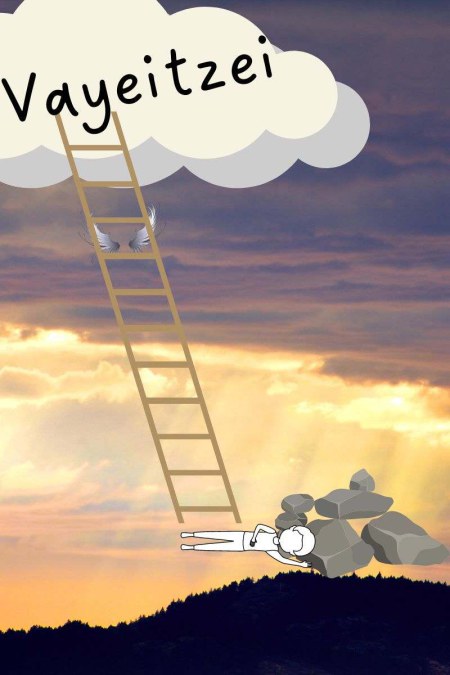
In this week’s portion, Vayeitzei, we read about Jacob dreaming of a ladder with angels floating up and down it. The concept that the ladder connects heaven and earth is one that’s captured the imagination of many.

And rightfully so.

This is one powerful metaphor that hits home when we think about what it means to be Jewish and, indeed, what it means to be a human being.

We have a mission to bring light into the world.

The mission is this: take things in this world and elevate them spiritually by giving them a push up the metaphorical ladder.

It sure sounds like a mission. But it’s not that difficult if you break it down. Every day we have endless opportunities to turn material things holy. Even if those things don’t seem consequential, it is our actions that elevate them up the spiritual ladder.

We bless our breakfast before we eat it, and so we elevate it.

We put time into acts of thanksgiving and loving-kindness, and we elevate them.

We give Tzedaka, and we elevate it.

Through the simplest of actions and by increasing our mitzvot, we become the proverbial ladder, connecting heaven and earth. All it takes is a moment to think “what can I do right now to elevate myself, these people, this place or these objects?” And you’ll quickly find it takes no effort at all to do so. It can be as simple as a kind word or a “thank you.”

What Goes Down Can Go Up, The Choice Is Yours

In Jacob’s dream, the angels both ascend and descend the ladder, showing us that it’s a two-way pathway. So, this should teach us that we ought to be careful not to insult the holy by making sacred things commonplace.

Speech is a powerful example. It’s a topic our Sages have battled with throughout the years. While the power of speech can certainly be elevated with kind words, meaningful interactions and prayer, so can it be used for lashon hara and harm.

Lashon hara is prohibited. Interestingly it is spoken of as a ladder:

You should not go up and down as a slanderer among your people.

Leviticus 19:16

The good news is that you have a choice – to lower yourself by using the power of words for destruction or to use them to elevate people, prayers and actions.

I hope that we’re blessed with opportunities to garner holiness from above and bring it down into the physical world as we pray for eyes to see these opportunities and arms to grab them, and may we stop just for one kind second to hold the elevator as someone rushes towards it.

Let’s just hope they’re going up!

Shabbat Shalom.

Food For Thought; Soup For The Soul… Toldot

Esau said to Jacob, “Pour me some of that red stuff for I am exhausted.”
Jacob said, “Sell your birthright to me.”
Esau said, “I am going to die, so of what use to me is a birthright?”

Genesis 25:30-32

Why would Esau offer up his birthright, something worth an insurmountable amount monetarily and spiritually, for a meagre bowl of food?

According to Esau, he did so since he would eventually die anyway.

It’s the type of rationale we’ve probably all used at some point, tugging between considering our future and immediate gratification. But we can only make healthy decisions when we are minutely aware that our choices directly impact our lives.

Gimme, Gimme, Gimme

We can take Esau’s statement, “I’m going to die anyway” beyond the surface. With these few words, he reveals his philosophy of life. Esau figures that the world begins when he’s born and ends when he dies, so why worry about things like a spiritual birthright?

Instead, he’d rather eat his stew and be happy right now.

He even goes so far as to mock Jacob, saying that Esau lapped up a bowl of delicious food in return for some “abstract future reward.”

Jacob looks to the future. Esau is driven by the here and now. He wants physical comfort and pleasure because he reckons the pleasures of the body are the be-all and end-all of life.

Planting The “Now” To Sow Later

Human beings are made up of two parts – the spiritual (soul) and the physical (body). Both need to be equally nurtured and nourished, but this can only be achieved through extraordinarily different means.

While the body, as in Esau’s case, seeks immediate gratification (sleep, food, money), the soul, in Jacob’s case, seeks eternal and longer-lasting pleasures (good deeds, love, meaning, a connection to G-d).

We need to let nature take care of the “now” so that we can sow a meaningful future.

The two go hand-in-hand.

Who is a wise person? He who sees the future”

The Talmud

The ability to anticipate long-term consequences is what separates the mature from the juvenile. Think about it, a child won’t expect that eating a few slabs of chocolate now will lead to feeling ill later on. A partner might not realise that constant distraction can lead to permanent separation from their family.

But there is always a tomorrow. It’s how we behave today that determines those tomorrows.

Harvesting Food For The Soul

We’re all fighting Esau’s battle one way or another. That back and forth between the body and the soul.

We’re constantly nudged to buy into certain types of lifestyles; tempted with takeout; lured with liquor; tantalised by tech. Everything is a quick click or voice command away.

Instantaneity is the norm – and so is our loss of perspective.

How do we get out of that ego-driven, instant gratification rut? We have to be proactive. We must seek out spiritual activities. Even something as simple as saying a blessing before you eat turns a physical act into something far more soulful. We’re no longer simply satisfying a physical hunger but reflecting on a deeper aspect of nourishing our bodies with energy to fulfil a higher purpose.

By moderating our physical needs, we can enjoy the autonomy to pursue our souls’ needs. After all, life is only as good as the soul you nurture.

Nourishing Nachas and Growth

Think about a funeral eulogy. Do you hear about the type of cars the person owned, or how many restaurants they frequented? No. At that moment of truth, what’s important is the person’s integrity and values and how they nourished nachas amongst those they encountered.

The Divine set up a system that requires growth. And we can only grow when we turn our back on temptation and do the right thing.

Then, those nachas soar to an exponential level over the instantaneous pleasures you pass up.

The more you do this, the more satisfied you will be – right now, and in the future.

Shabbat Shalom.

Matchmaker, Matchmaker, Where’s My Beshert?

With long work hours, busy lives and let’s not forget a pandemic, it’s no surprise that more people are looking for love in different places. Yet, studies show that this type of matchmaking is resulting in long-term commitment less often.

Relationships aren’t easy. After all, you have to do them with someone else. Relationships and marriage take work – and that’s once you’ve found a match.

We may no longer live in an era of arranged marriages, but there’s still a fair bit we can learn from two of the most successful Biblical matches – Abraham and Sarah, and Isaac and Rebecca.

The story of the search for and discovery of Isaac’s bride is the topic of this week’s portion, Chayei Sarah. It’s, by all means, one of the earliest accounts of an arranged marriage.

It’s also incredibly romantic.

Abraham realised that Isaac needed a wife. Sarah had recently died at the age of 127, and Isaac was depressed after his mother’s death. Abraham knew that Isaac wasn’t in the right mindset to make a choice himself, so he sent a servant out to find a match for his son.

Turn Your Eyes Up To Find True Love

Do you remember the first time you laid eyes on your perfect match?

Do you remember what you felt at that moment?

Or have you yet to experience the magic of the Divine’s matchmaking skills?

Towards the end of this week’s portion, we’re offered a glimpse of such an encounter when Rebecca, after a long journey, lays eyes on Isaac.

Isaac, we learn, was having an evening stroll in the field when he spotted a caravan of camels. At this stage, he doesn’t realise that the caravan is Abraham’s servant returning from his mission to bring back a wife for Isaac. Isaac only sees the camels.

Little does Isaac know that this is about to be the greatest “meet cute” in history.

Rebecca, we’re told, “looked up: seeing Isaac, she got off the camel” (24:64).

What I love about this phrase is that Rebecca’s descent is described in Hebrew as nun-pei-lamed, which rather than “got off,” means “fall.” So, it’s safe to say that Rebecca “fell” for Isaac, isn’t it?

She then looks up and sees Isaac. Isaac looks up and sees Rebecca. They look up at one another and there they experience “love at first sight.”

So, what does it mean to “lift up” your eyes?

Let’s explore three possibilities using our beautiful couple.

Firstly, when they lift their eyes, Rebecca and Isaac see heaven. They see the Divine in one another.

Secondly, by looking up, the beautiful pair see the potential way beyond the surface. They’re able to look beyond their beginnings and see the light – that magical love-at-first-sight spark – within.

Finally, lifting up their eyes helps them to see their future. Isaac and Rebecca can see beyond the here and now and envision a future filled with blessings together. They see the promise of what lies ahead.

The Blessings of Love Are a Gift From G-d; You Just Need To Lift Up Your Eyes

The Torah teaches us that romantic love is a gift from the Divine. It’s the blessing of being able to see beyond the surface. Once we’re able to “lift up our eyes,” then can we find true love; our true match.

How often have you heard stories about how people met their beshert (their destiny; their soulmate) when they weren’t really looking? In lifting up their eyes, they had the blessing of seeing something that had eluded them and in so doing, they find true love.

We find love when we look up; when we see the future in another. When we can see beyond the moment and beyond that initial spark. We find love when we see what lies ahead and the blessings that await.

Rebecca and Isaac’s marriage, and indeed the future ahead of them, isn’t destined to be easy. But, through the work of G-d, their finding of one another and their romantic tale of “falling” in love, this week’s portion provides us with hope and belief in the kismet of relationships.

Look up, and there you will find your beshert.

Shabbat Shalom.

You’ve Just Got To Do Your Bit – Vayeira

“Man plans and G-d laughs.”

It’s one of my favourite Yiddish sayings. How often have you made great plans only to watch them whirl down the drain?

Ever dreamed big, only to realise it was, quite literally, just a dream?

Have you gotten excited about a particular ambition and then, shock and surprise, you felt defeated when that ambition didn’t come to anything?

Sometimes, we try in earnest to do the right thing. Yet, you simply cannot see your victories, leaving you wondering whether it’s worth the time, effort and thought when the results were such a letdown.

Let’s say you are arranging a special event for your community – something that could benefit the community and their networks. You put hours into it. You plan every detail from the venue and programme to the food and music.

The special celebration is set to take place in a few days. You started months back, and yet, you can count on one hand the number of responses you’ve received. Some simply stated, “unavailable.”

So, why can’t things just work out the way you want them to? Why does the entire evening feel like a heart-breaking flop that you spent hours and hours planning? Should you even bother going out of your way for this event?

I say yes. By staying positive, you reaffirm your decisions to go ahead with your plans and trust that G-d will ensure it all works out.

Man Plans, But Maybe, Just Maybe,

G-d Cooperates

In this week’s portion, Vayeira, we encounter Abraham recovering from his circumcision. He’s 99 years old. That’s got to be enough reason for him to relax and slow down a little. But Abraham was an intrinsically good person. So, even in his time of pain and discomfort, Abraham was desperate for visitors. He loved to host guests.

Yet, G-d dialled up the sun’s temperature to the max, ensuring no wanderer would dare trek in the sweltering heat. It might sound cruel – G-d making it so guests couldn’t visit Abraham. Yet consider it from G-d’s point of view: Abraham was spared the burden of hosting visitors and provided with time to recover.

That sounds reasonable, doesn’t it?

But being Abraham, rather than accepting G-d’s favour, he felt despondent that there was no one around. Abraham truly loved hosting visitors. All his life, and even now at 99 and post-circumcision, Abraham yearned to be kind to others.

Even though he knew of the impossibility of people venturing into the blazing heat, Abraham went and sat outside his tent and waited for guests to arrive. In fact, he said,

“I will sit here until somebody comes.”

So, seeing his commitment to kindness and welcoming visitors, the same G-d that turned up the sun for Abraham to rest, sent Abraham visitors in the form of angels, for angels could survive the heat.

Sometimes, you need to have faith in the unimaginable – and Abraham did. He had faith that visitors would come. And they did.

Both Abraham and G-d came to the party. They both did their bit.

The Path Best Travelled

Don’t you find there are times when you’re so caught up in dreaming big and running your life, knowing what’s best for you, only for G-d to pump the breaks and say “take what you love the most, and go where I will show you?”

Where is that, you may wonder? Well, it’s the best path in life – G-d’s path.

Every now and then, the Divine sends us a reminder that He has our back. He knows what’s best for us. He knows an even better best than what we imagined. His dreams for us are bigger than our own. All we need to do is have faith and show our unwavering commitment.

Think about that. As soon as Hashem found this commitment from Abraham, Isaac was able to return home unscathed, and Abraham received even more blessings.

You’ve Still Got To Do Your Bit, Though

Sometimes, doing your bit involves having faith in the unimaginable, perhaps even the impossible.

But don’t stop there.

Sometimes, doing your bit is about taking a bold step out of your comfort zone and digging deep for determination to put your best efforts into turning your hopes and dreams into your reality.

And even then – even when you truly believe in your mission and are determined to succeed, ignoring any excuses G-d’s given you, guess what? He might just send some angels your way, too.

At the very beginning of this week’s portion, Vayeira, G-d shows Abraham kindness. It’s sweltering outside, so G-d arranges that no guests will arrive at the tent, giving Abraham the downtime he needs. Yet, Abraham has no intentions of resting. He desperately wants to perform acts of kindness, and simply cannot settle until he has guests.

When those guests, in the form of angels, finally come, Abraham runs around looking after them and at the same time, finds himself relaxing.

You see, when your soul yearns for something that affects you on the deepest and most personal level, you (and G-d) will find a way to achieve the goal.

Just do your bit, and G-d will do His.

Journey Beyond The Quiet And You Will Find Your Purpose – Lech Lecha

G-d said to Abraham “go for yourself from your land, from your relatives and from your father’s house to the land that I will show you. And I will make of you a great nation. I will bless you, and make your name great, and you shall be a blessing.” (Lech Lecha, 12:1-2)

This is the first command G-d makes to Abraham, the patriarch of the Jewish people. He is to leave what is safe, known and comfortable and begin a new nation, the Chosen Nation. According to the Rambam, everything that happened to our forefathers is a presage for the Jewish people. Their behaviour is the groundwork for how we should conduct our lives.

Lech Lecha (go for yourself) applies to all of us.

The late American author, James Michener, wrote in The Fires of Spring (NY: Random House, 1949):

For this is the journey that humans make: to find themselves. If they fail in this, it doesn’t matter much what else they find. But if a person happens to find oneself – if they know what they can be depended upon to do, the limits of courage, the positions from which they will no longer retreat, the degree to which they can surrender their inner life to someone, the secret reservoirs of their determination, the extent of their dedication, the depth of their feelings for beauty, their honest and un-postured goals – then they have found a mansion which they can inhabit with dignity all the days of their lives.”

How do we summarise Michener’s musing?

We can be so much more.

Voyaging Beyond The Quiet To Realise Your Purpose

In Lech Lecha, we read a comparable instruction to find purpose, to live and to listen as your true self – to find the quiet beyond the quiet.

Abraham’s command comes from G-d’s voice which Abraham hears in his mind. It’s by no means a voice that’s only experienced atop mountains. It’s a voice echoing in the depths of our minds. And it booms when we properly stop and listen. It’s a voice that challenges us to contemplate if this is who we are meant to be; if this is what we’re called to do; if this is the objective for which we’re created.

So, wasn’t G-d’s call to Abraham a call towards a greater purpose? Surely each one of us was created for a particular purpose – we are meant to right something.

It’s comforting but it’s also puzzling. We all want what Abraham was promised, a life of abundant blessings. And just like Abraham, we’re called into being, to discover our purpose and meaning, to impact our world and make it more compassionate.

But First, Listen

Lech Lecha – set off on your lifepath of self-awareness and manifest your purpose in life. Just listen and you’ll discover that purpose.

Listening is hard, though, isn’t it? It requires many takes to listen to the quiet behind the quiet, or behind the noise even. Negativity and fear all too often distract us from truly hearing.

But listening takes courage. It takes bravery to hear that we are called to greater things. It takes a strong will and vulnerably open heart to hear lech lecha – journey forth to a place that G-d will show you.

Abraham journeyed towards the Negeb in stages, and so it is that stage by stage we build a life. Each stage, each moment, is a chance for spiritual growth. Lech Lecha calls us to live courageously.

And Then… Have Faith

Lech Lecha – go for yourself, for your own sake. Not for the community’s sake. Not for the sake of others. Lecha – for you and your own well-being. Get out of the rut you’re in, the place in which you’re stuck. It’s the only way to grow spiritually. Remain, and you stagnate. You’ll never reach the heights you so deserve.

Scary, right? It takes faith.

Momentus Abrahamic journeys are difficult, especially because we leave what is known and comfortable, and we think we’re leaving behind a piece of ourselves or, what we perceive ourselves to be. It’s true, sure, it’s how we influence those around us.

But when we feel pushed out, we think we’re being forced to leave a part of ourselves behind, leaving us a little broken. No longer whole. But who you are is also where you came from.

It takes mountains of faith.

Journeys include stages and steps. We journey from and towards. To complete a journey, both are essential.

Abraham knew what he was leaving behind, and only during his journey would he discover what he was going towards.

But he learns, as do we in the Torah, that the journey is the central and most critical part of his spiritual growth.

The joy is in the journey.

So, Now We Are Here

I came across a rather appropriate and stunning Buddhist teaching recently that the word nowhere consists of “now” and “here.

It so beautifully expresses the human dilemma of being either here in the present or nowhere – anxious, distracted and failing to soak up the present moment. Lech Lecha is a commandment to be present.

Our spiritual journeys are not a destination. Rather, the journey is a manifestation of your life’s purpose. It’s now and here that we can distinctly listen to the quiet beyond the quiet.

Every single day we have the opportunity to align ourselves with life’s blessings; to find the beauty of life and to live in the truth of it. Life is both a struggle and magnificent, and once we journey beyond the day-to-day noise, anxiety and fear, we truly hear that voice challenging us to consider the purpose for which we’re created and find the strength to travel the path that is meant for us.

Shabbat Shalom.

Ride The Crashing Waves Towards The River Of Tranquillity

We know the story. The world’s gone off the rails, G-d’s had enough. Enter giant flood.

But wait, there’s a guy that G-d’s got His eye on – Noah. G-d instructs Noah to build an ark and pack it with selections of every animal on earth and use the big boat to ride out the flood.

In true style that only the Big Boss can pull off, the skies open and the rain pummels the ground for 40 days. Everything is destroyed. Yet, as the water rises, so the ark lifts off the ground, keeping its charges safe.

That’s one anxiety-inducing narrative. And the story of so many people’s lives.

How often do you find yourself fretting over what will be; what people think; what the next day, month and year are going to throw at you? It’s like you’re treading a tidal wave and it’s draining.

Or is it?

In Parashat Noah, the wild waters lift the ark, and so, too, can your monsoon of internal angst be the “lift” you’re looking for.

There’s A Word For That

Raging thoughts, torrents of torment, that inner negative voice pummelling at your soul. These are the raging waters Noah endures.

But Noah, under G-d’s instruction, builds an ark.

The Hebrew word for ark, “teivah”, also translates as “word.” So, instead of picturing Noah literally entering the vessel, what if we consider him setting sail upon words of prayer?

Is it not the perfect rescue plan? Calming, peaceful words of prayer brought this week’s leading character hope, solace and, ultimately, survival.

Doesn’t that sound blissful?

You don’t need to reinvent the wheel. You can take advantage of this rescue blueprint. You can enter into words of prayer. Talk to G-d. Find the comfort you need. Be uplifted.

A Rescue Blueprint For Our Lives

When you work to escape your internal tidal waves of anxiety and seek refuge in your relationship with the Divine, you’re netting a whole lot more than refuge and escape. Your prayer and connection are enriched.

When a tormented soul filled with a monsoon of anguish turns to the Creator in prayer, everything stops, if just for a moment, and G-d doesn’t just hear you, He truly listens.

None of us wants a life of “raging water,” but it’s also inevitable. The waves can crash right over you, threatening to knock the wind out of your sails. But G-d will always throw you a lifeboat to carry you above the waters and navigate your way through life’s tsunamis.

This is exactly how Noah rode the waves. He knew that the chaos in his life wasn’t some ad hoc experiment. He understood that the turbulence was designed to bring him to a better place of appreciation and deepen his connection with the Divine.

It’s this insight that brought Noah such harmony and calm. The serenity in his mind, heart and soul allowed Noah to acknowledge and trust that G-d will help him ride out life’s tsunami.

Find Peace In Calamity – Hook, Line and Sinker

There are times when life feels soul-crushing; when you want to be left alone in the quiet or perhaps you battle to find serenity.

That’s when you need to remember Noah. His entire world as he knew it was washed away, but he remained peaceful. He boarded his ark and rode the waves.

G-d has an ark for you, all you have to do is ride out the turbulence with faith.

Talk to G-d. Consider what’s expected of you at that moment, and no doubt, as long as you’re doing something, you can leave the rest to Hashem and bask in the inner peace you’ll discover.

Be more like Noah. Worry less about the results. Find your ark, crash through the storm and emerge in a peaceful paddle down the river to tranquillity.

You’ve got this.

Endings Make For Perfect Beginnings – Bereshit

Beginnings are difficult.

This sounds like an oxymoron, right? But think about it. Not only do beginnings demand a whole lot of self-motivation and discipline that forces us out of complacency; beginnings are often the result of endings. And that means that even more than discipline and motivation, they require fortitude and courage.

The New Jewish Year has started, and with it, a new cycle of Torah readings begins this week. It’s Parashat Bereshit where we learn that G-d created the world from nothing.

The ebb and flow of life are unique as in it there’s the concurrent action of pushing ahead while gripping onto the past.

But if it is the past from which we learn, from which we mend the broken pieces, does that not build the foundation for new beginnings?

Now is the perfect time for us to take the multitude of musings, introspection and lessons we’ve learned these past High Holy Days and forge ahead, hopefully, renewed and ready to embark on new beginnings.

The beginning of the Torah lays down the foundations for the world, emphasising distinctions and boundaries. The rest of the Torah sets out to demonstrate right vs. wrong, things that bring death and things that bring life.

Think about that contradiction – all these differentiations and distinctions are created by one G-d; the same G-d that made heaven and earth, plants and animals and indeed, human beings.

When the lights go out for Adam and Eve on the first Friday night, as they’re expelled from the illuminated Garden of Eden just before Shabbos, they find themselves in the darkness G-d created. But it’s the same G-d that doesn’t want them to live without light, even during the night hours. It’s then that G-d helps Adam and Eve to create fire, piercing the boundaries of darkness to create light.

During Havdalah, we say that G-d distinguishes between light and dark and as we do so, we hold up a candle to declare that even within such distinctions, we are not unmindful of the “other.”

We need light in the darkness.

We need endings to create beginnings.

This Shabbat let’s hold up that candle to remind us that we’ve just brought in the new Jewish year; to bring in ideas and truths; community and togetherness; light and dark and in so doing, we will build on what is and begin what is destined to be.

Shabbat Shalom!