A Hasidic master, Sfat Emet, writes during Sukkot “this is wholeness: a person with a broken heart… and in every place that G-d dwells, there is wholeness.”
Wholeness is a person with a broken heart. Broken equals whole.
What?
This is how I understand it. A person whose heart is not broken, if even some of the time, isn’t paying attention. Someone whose heart isn’t, at least now and then, cracked open by the world’s fragility isn’t paying attention.
Sukkot is the perfect opportunity to open our hearts wide and decorate and build our fragile beings. A sukkah’s roof is flimsy and leaks, succumbing to the elements. Our bodies are like a sukkah. Life is like a sukkah. It’s wrenching, drenching and distressing when we allow ourselves to feel. But when we do stop and feel, that’s when we open our hearts to G-d; we let in compassion and wholeness. We allow ourselves to feel as we let in truth, kindness and grace.
When we allow ourselves to feel, we feel the pain, but we also feel what heals and uplifts – that which endures beyond broken pieces.
Sukkot is a time to rejoice. To me, rejoicing means authenticity – opening our hearts to both the bitter and the sweet.
This Sukkot, and in the year ahead, may we open our hearts and be blessed with upliftment and comfort to soothe every broken piece, and may that bring the strength to bring hope and courage to our fragility.
Chag Sameach!
As written for Beit Luria’s October 2022 newsletter.
The Torah portion, Nitzavim, is read on the Shabbat before Rosh Hashanah – a time when teshuva is on our minds. Teshuva, repentance, is the great mitzvah of the ten days beginning with Rosh Hashana and culminating on Yom Kippur.
There is no more appropriate Parsha to read right now, with Nitzavim teaching us, as the sages suggest, that teshuva is the commandment that’s “within our capacity and within our reach to fulfil.”
“It something that is very close to you. It is in your mouth and in your heart, so that you can keep it.” (Devorim 30:11-14)
Are you a smoker that’s tried to give up the habit this year? Chances are, you’ve gone through a whole bunch of stages, often convinced you’ve conquered the addiction only to suddenly crave a smoke again. It’s then that you likely feel that your efforts were for nought. You’ve gotten nowhere. Your desires and cravings are stronger than ever. You get frustrated and you give up.
But what if you stick to your resolve? What if you fight your desire time and time again, even when it feels like you’re getting nowhere?
At some point, something’s got to give. A day, a week and even a month might go by without any serious cravings. You might reflect and not be able to pinpoint exactly when or how it happened. One day things were tough. The next, you never smoke again.
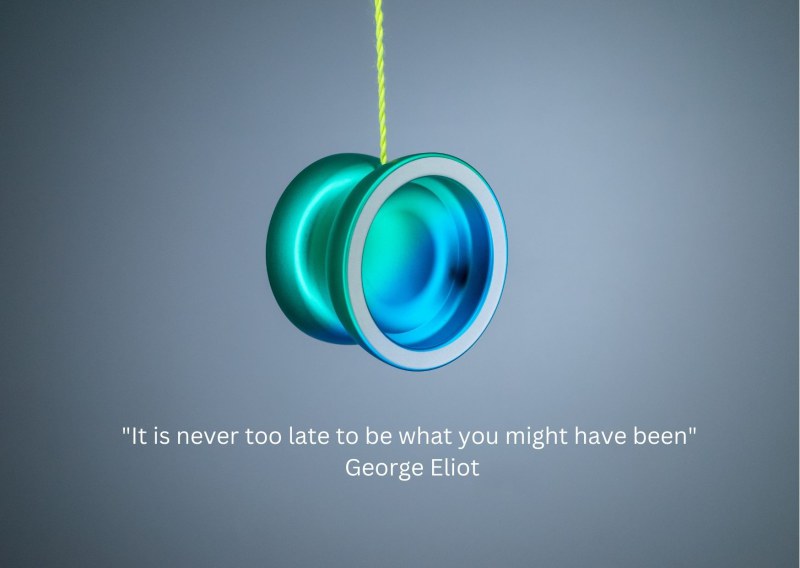
Attempting to change our destructive character traits is a similar thing. It’s not even that we make progress in baby steps, but rather like a yo-yo. Sometimes we swing down as if we’re getting somewhere and then, without warning, we swing right back up to where we started.
It’s these feelings of hopelessness that often see us abandoning our efforts. We don’t feel capable. We feel pain at the lack of progress. But therein lies the test.
As long as we persevere, a time will come when we notice the change. A big change. What was difficult becomes trivial.
This doesn’t mean we can let our guard down. There’s the teshuva concept of “you will return” and that means the struggles may return, too. But when you’ve struggled and wrestled authentically – when you’ve done whatever you could “with all your heart and all your soul,” it is said that the Divine will “circumcise our hearts” to experience a paradigm shift.
The Torah refers to the culmination of teshuva as “finding.” It makes sense. You put in all the effort in your struggle and in the end, you “find” within yourself something new, without even realising when or how that change happened.
If we took teshuva as a step-by-step, gradual process, just as you would trying to give up smoking or embarking on a diet, it would be a pretty easy mitzvah.
But Hashem doesn’t make things easy. Instead, we struggle so that one day, without any warning, we open our hearts and souls to Heavenly assistance, making those efforts – those struggles – worth it.
So, it’s up to us. We can’t wait for others to do teshuva for us. We can’t blame anyone else for our shortcomings. We have no excuses. The ability to do teshuva is within our hearts and mouths.
It’s Elul and we all want to be moved to atone. We want to experience the joy and blessings of Heavenly assistance; of emerging from the Days of Awe renewed.
Whether you’re struggling with a poor character trait, an apology or simply want to set the intention to do better, make a chesbon ha-Nefesh, or self-examination, and spend time reassessing your priorities and values.
Think about yo-yos and struggles; perseverance and persistence.
Think about where and how you can do better in the coming year.
After all, it’s within our capacity and reach to fulfil teshuva. We just have to put in the effort.
Fridays are my favourite day of the week. I wake up with a song in my head and heart, a spring in my step and spend the day looking forward to Shabbat.
Our Jewish calendar, after all, teaches us the importance of both mental and physical preparation. Whether it’s baking challah on Friday afternoon, cleaning the house, getting the candles ready to light or simply setting the table, there are different ways we ready ourselves for the weekend.
It’s not just Shabbat, though. There’s the big pre-Pesach clean as we rid both our hearts and homes of hametz. We count the Omer in the runup to Shavuot. And then, there’s the month of Elul. It’s the onramp to the High Holy Days, and while it might not be widely practised, there are a few special customs worth mentioning.
Firstly, we add Psalm 27 to our daily liturgy. We chant selichot asking G-d for forgiveness before we even arrive at Yom Kippur. And just as importantly, we engage in personal and intentional self-reflection and improvement (cheshbon hanefesh).
Some may say that Elul gets short shrift in our calendar. After all, it starts now at a time when we begin the hustle and bustle of preparation for High Holy Days that can leave us somewhat breathless.
But this is exactly why we need Elul. It’s the opportunity to personally prepare for the Days of Awe. Whether you pray, journal, reconnect or simply take time to reflect, Elul is the chance to go inwards and consider in what ways you’ve acted in accordance with your highest values this year.
How are you falling short?
What support do you need to make changes?
Which of your relationships (self, divine and human) need attention?
Elul is like the magical pre-Shabbat prep. It’s heavy lifting, yes. It can be a little cumbersome, like the pre-Pesach deep clean. But you need to put in real effort. Do so, and things get lighter, cleaner, and clearer, and so, prepare us to walk into Rosh Hashanah proud of the work we’ve done, ready to bask in the holiday.
Just like the past few years, this one has been a rollercoaster. Whether it’s left you gasping for air or with too much time, Elul is here and we can navigate it together. The shofar is about to sound and this year, perhaps more than others, we need to thoroughly hear its call.
Let’s go inwards, but let’s forge ahead together and make this year’s Days of Awe as meaningful as possible.
During this sacred month, sound the great shofar of your internal freedom. Go inwards, realign and give those exiled parts of yourself the light and love you so deserve so you may emerge clear-headed and spiritually ready for the communal celebrations of the High Holy Days.
As printed in the September 2022 Beit Luria newsletter.
Isn’t it interesting how the lessons we learn from Disney films translate to this majestical month of Elul?
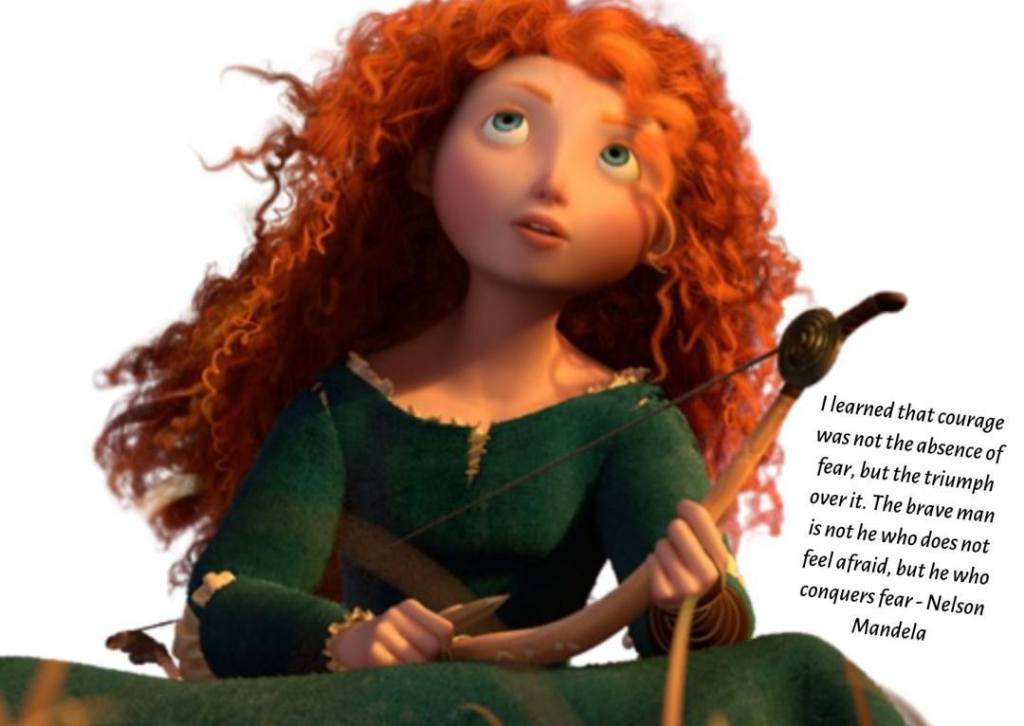
If you’ve ever watched Pixar’s production, Brave, you’re familiar with the fiery Merida. Not only is she a skilled Scottish archer, but she’s also determined to defy age-old customs, refuses to marry a lord from another clan, causes chaos in her kingdom and is determined to change her fate.
Yes, Merida consults a witch for help, and in so doing, her family is cursed with Merida forced to undo the spell and discover what bravery really means.
If only she knew about Elul, and this week’s Parashah, Shoftim.
Let’s dive in.
None Of Us Is Perfect
The Yiddish proverb, “man plans and G-d laughs” is one of my favourites. Pretty much nothing ever goes exactly to plan. And pretty much none of us is perfect. We’re flawed. We’re selfish. We make mistakes. And with that comes pride and stubbornness.
Just ask Merida. The blazing Scott lets her temper get the better of her. She’s easily frustrated. She’s easily angered. Aren’t we all, at times?
Yet, when she reconciles with her mother, Merida must realise that to change her mom from a bear back into a human, she needs to look inside and mend the bond that’s been torn by pride. Once Merida and Queen Elinor communicate their emotions, their bond is strengthened tenfold.
Shoftim is the first portion we read in the month of Elul. It’s the kick-off to the special season spanning the months of Elul and Tishrei, including the days of Judgment and Repentance.
Right at the beginning of the Days of Awe, we’re summoned to take ourselves in hand, to become internal judges over our characters – our pride, our anger, our behaviour – and prepare to face judgment.
By judging and weighing our internal struggles and actions, repenting wrongdoing and making the necessary changes to correct our flaws, we avoid harsh scrutiny from the Divine. G-d leaves matters to human initiative. Merida realises that she needs to go inside and address her pride, and in the same way, those of us who fail to judge ourselves are submitted to the Divine Court’s jurisdiction.
Ditch The Stereotype
Merida is brought up in a stereotypically male-dominant society that holds onto ways of old. Early on in Brave, Merida’s dad, Fergus, brings home a bow and arrow for her birthday. Merida is over the moon and runs straight out to play, while her mom rebukes her dad with the words, “a bow, Fergus? She’s a lady!”
There’s no doubt that Queen Elinor is an authoritative matriarch who wants her daughter to follow in her footsteps, exuding poise and elegance and upholding traditions established by the Scottish forebearers.
Merida is not interested. She desires to be free of ancestorial restraints. She wants to be a woman, yes, but one with a voice and conviction for her causes. This strength paves the way for Merida to ditch the stereotype and be herself – an independent woman and a respected leader.
The first chapter of Maimonides’ Hilchot Deot (the Laws of Character Development) are dedicated to the topic of changing your character and developing the ability to experience feelings. By executing a controlled course of behaviour that goes against the ancestorial grain, you can change your character. You can break free from the chains, just like Merida, to find your voice and ditch the stereotype.
“There are those who say fate is something beyond our command. That destiny is not our own. But I know better. Our fate lives within us. You only have to be brave enough to see it.” – Merida
Change, Through Teshuva, Is Good
Merida comments that “our fate lives in us. You only have to be brave enough to see it.” She also acknowledges that she needs to forge a new path to feel fulfilled and to do so requires both openness and the readiness to change.
Hello, Elul. Hello, teshuva.
Coming to grips with the days of teshuva is scary stuff. It’s one thing to command people to execute actions. It’s another to ask them to experience feelings on demand. G-d hasn’t equipped us with the switch to turn feelings on and off. Experiencing feelings on demand is no easy task.
Yet, Merida is prepared to take risks in her hunt for purpose and freedom. She heads off into the forest alone, following the will-o’-the-wisps, even though her horse warns her not to. She makes a deal with a witch. All of these things she does for better or worse – for change.
And what happens? Merida grows from her experiences. She learns that she can be Scottish royalty and enjoy her freedom. She gains wisdom and the ability to truly listen to those around her. She learns that change is for the better. She becomes humbled.
“I’ve been selfish. I tore a great rift in this kingdom. There’s no one to blame but me. And I know now that I need to amend my mistake and mend our bond.” – Merida
Humility, as Merida shows, doesn’t equate to a lack of self-esteem. In Judaism, humility is the recognition that there are important things in this world beyond your own needs. Humility is perspective. As strong and capable as Merida is, she is a small part of her kingdom. She learns that through change and teshuva – in the sense of returning to something you’ve looked away from – what’s right is far more valuable than serving herself.
As mere mortals, we are not spiritually equipped to effect immediate changes in our characters. Knowing we’re on the wrong track isn’t enough to put us on the right one. Knowledge doesn’t necessarily alter character.
But feelings do.
Love (For Self And Others) Conquers All
Just about every single Disney film ends with the premise that love conquers all. Through all our failures and faults, our need to love and be loved supersedes anything else we can offer.
Love lets us care, listen, understand, grow and change. Without it, we’re merely selfish, prideful beings who fail to see the good in our hearts and in others’.
Teshuva, repentance, has to come from the heart. True repentance requires self-recognition of our faults and a resolve to correct them. It’s not something that we can squeeze into just one Parasha or one particular season. It’s a process. It requires constant attention to gradually change and grow.
Merida’s strength of character and desire to go inward, to change, to grow and to love paves the way for her to find her place. She knows she’s different. She longs for freedom. She craves to chase the wind and touch the sky.
But to do so, she must be strong, loving and brave; and so should we all if we are to love and be loved; to change and create change not just during the Days of Awe, but every single day.
Teshuvah – the great mitzvah of repentance. We hear the word a lot this time of year, especially so in the days between Rosh Hashanah and Yom Kippur.
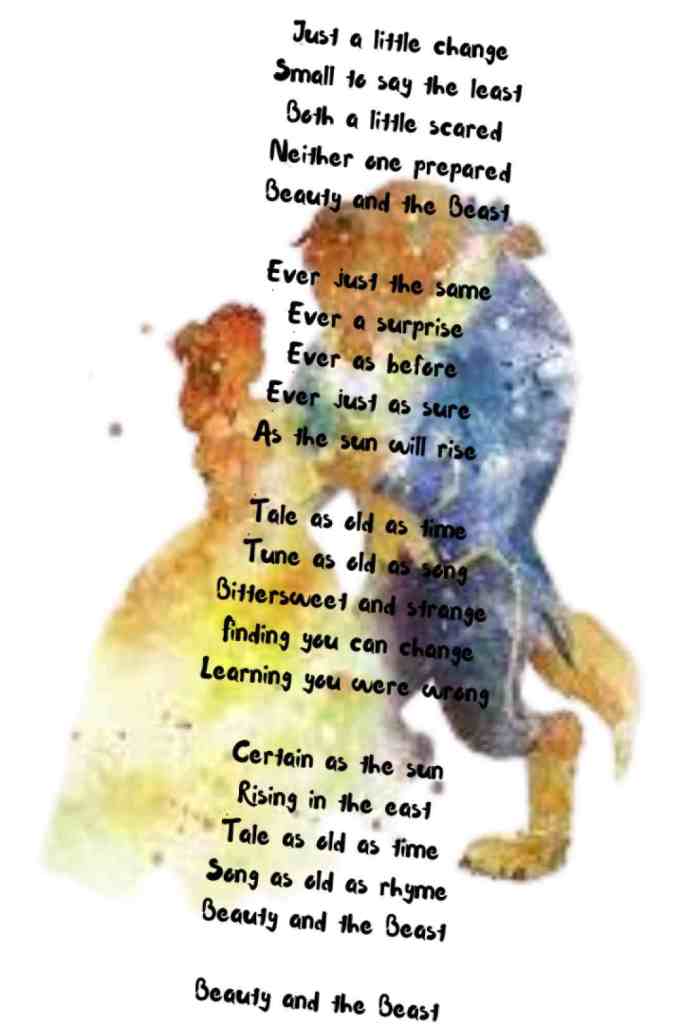
But it’s also a Disney theme. Beauty and the Beast is a story of teshuvah. The Beast’s sins of selfishness and pride bring upon himself and his household the curse. Before that last rose petal falls, the Beast must learn to love and be loved. He must repent or remain a Beast forever.
Think about it for a moment. The Enchantress didn’t turn a Prince into a Beast. Rather, her spell showed him the ugliness already within him. Each member of the household represented their internal character. The reliable Cogsworth became a literal timepiece. The comforting Mrs Potts became as soothing as a cup of tea and the flashy Lumiere became a candelabra.
But the handsome Prince with the dreadful temper and lack of empathy became his inner Beast.
Maimonides teaches that teshuvah has its origins in the Temple and its sacrifices. Part of those sacrifices is vidui – a verbal confession on the part of the wrongdoer. It’s remorse or shame. It’s a determination not to repeat the wrongdoing; to put things right. These are the fundamentals of teshuvah.
Let’s go back to sacrifices. Beauty and the Beast is a story of sacrificial love. Belle chooses life in a cage so that her father can go free. Belle, you might argue, also loved the Beast sacrificially.
The curse did indeed humble the Beast. The change started even before Belle arrived at the castle. By the time she got there, the Beast desired love. He wanted to love. He was angry, yes, even ashamed. But his humility resulted in him putting others first.
He risked his own life by saving Belle from a pack of wolves, yet before that, he wouldn’t so much as give up a room in his castle for an old woman on a stormy night. Then, in the greatest of sacrifices for the Beast, just as he’s winning Belle over, he lets her go to find her father.
Yes, there are mixed emotions in the Beast’s love. He certainly doesn’t want to be a Beast. But in setting Belle free, he shows his love for her. He puts her first. His love for Belle is stronger than his yearning for the curse to be lifted. He’s repented of his selfishness and pride.
Part of the appeal of this Disney movie is how relatable it is. We all, at some point, have felt something Beastly in us. And we all desire to love and be loved.
This time of year reminds us to reflect. Maybe we haven’t turned away an old lady in need of a room, but there’s probably been a point where we’ve chosen hate (or indifference) over compassion; selfishness over love. And just like the Beast, we need to learn love and humility.
During the Days of Awe, we’re urged to repent our wrongdoings of the previous year. We need to take stock, examine our actions and recognise and regret where things went wrong. Teshuvah – repentance – is one of the most important values in Judaism.
How so? G-d and the Jewish people are linked through the covenant in which G-d promises to be our G-d, and we promise to be His people. It’s sealed in the Torah and made real through the mitzvot. But not even the most devout of people can perform all 613 mitzvot. So, what happens then? Are we barred from the love of the Divine?
That’s where teshuvah comes in – the chance to wipe the slate clean. To repent. G-d’s love is bigger than any wrongdoing we commit. To get G-d’s forgiveness, it takes teshuvah – to humble ourselves and sacrifice pride to make up to those we have wronged.
In the closing theme song of Beauty and the Beast, as the Beast once again turns into a Prince, the lyrics ring out “learning to change, admitting we were wrong.” Repentance, confession and reflection are all illustrated in the changed character of the Beast.
There’s an inner beast in all of us. Some of us are just better at hiding it. But while the Beast lets his bad side take centre stage, he eventually starts to make better choices, quelling his nastiness. Every day we have choices. We can choose to make good decisions for ourselves and others. Or we can be destructive and hurtful.
Sacrifice plays a big role in the relationships in Beauty and the Beast. Belle sacrifices her freedom for her father, becoming the Beast’s prisoner. The Beast sacrifices happiness to let Belle go. It’s an endless Disney tale of people sacrificing their needs for the good of others. It teaches us that sacrifice, no matter how hard it might be, may reap big rewards – the quintessential “happily ever after.”
By offering himself as a model of teshuvah, the Beast wipes clean his name and castle and learns to love himself and Belle. It’s a tale as old as time, but a model that ought to stimulate our introspection, repentance and resolve.
This Elul, are you the Beast or Prince?
Will you seek humility and teshuvah and bring yourself closer to the Divine to achieve your happily ever after?
I am unashamedly a Winnie the Pooh fan. This week, though, I want to focus on Eeyore. We all have a little Eeyore in us, don’t we?
Jews, perhaps, could be considered a collective Eeyore.
Think about it. We’re supposed to be eternally melancholy, burdened with years upon years of oppression. We always have a big sigh to let out. A “but” on the tips of our tongues.
Parashat R’eih, kicks off with sprinklings of bitterness. G-d commands the Israelites to climb the hills of the Promised Land and pronounce both a blessing at Mount Gerizim and a curse at Mount Ebal.
Does there always have to be a negative weighing down the positive? Always a “but?”
I’m going to say no. In fact, tucked towards the back of the portion, we learn:
“You shall consume the tithes of your new grain and wine and oil, and firstlings of your herds and flocks, in the presence of the Eternal your G-d, in the place where G-d will choose to establish the divine name, so that you may learn to revere the Eternal your G-d forever. Should the distance be too great for you, should you be unable to transport them, because the place where the Eternal your G-d has chosen to establish the divine name is far from you… you may convert them to money.”
It goes on:
“…spend the money on anything you want… and you shall feast there, in the presence of the Eternal your G-d and rejoice with your household.” (Deuteronomy 14:23-26).
Read the above carefully. It’s a blessing. There’s no curse or big “but.” No sigh. There’s only the mitzvah of taking care of the strangers, the widows and the orphans so that they, too, can be happy.
As Eeyore says, “a little consideration, a little thought for others makes all the difference.”
It’s during this section if only briefly, that reverence for Hashem is equated with happiness, lightness and celebration – not obligations. We’re reminded that it’s a mitzvah to celebrate our culture, to share the happiness with our loved ones and those who need a little lightness, a little joy – to uplift the inner Eeyore.
Maimonides teaches that anybody that benefits without reciting a blessing is out of line. The same way we recite blessings for benefits we derive from this world, so should we recite blessings for each mitzvah before fulfilling it.
These aren’t limited to narrated blessings, but also the blessing we encounter every day. Despite daily obligations and burdens, there’s always something to be grateful for.
Deuteronomy 16:13-15 cites:
“…seven days you should hold a festival for G-d… and you will have nothing but joy.”
To be joyful, in this sense, is to rejoice – to do a series of actions. Come together with those around you; your family, your community, the vulnerable and the sad. Create a festival with the earlier-mentioned wine, grain and oil. Celebrate. Include those even on the margins of your community.
Maybe today’s the day you uplift someone’s inner Eeyore, or perhaps they turn your Eeyore day into one of joy. Either way, it’s a moment to be grateful for.
This week, take some time to lift someone’s spirits and be grateful for the opportunity to do so.
As published in the Beit Luria newsletter, 30 July 2022
This week’s Torah portion in the diaspora is Parashat Masei. A quick glance at the portion suggests a straightforward recounting of the ancient Israelites’ journey in the desert. It’s kind of like the way we’d retell our tales about a trip – went here, did this, saw that.
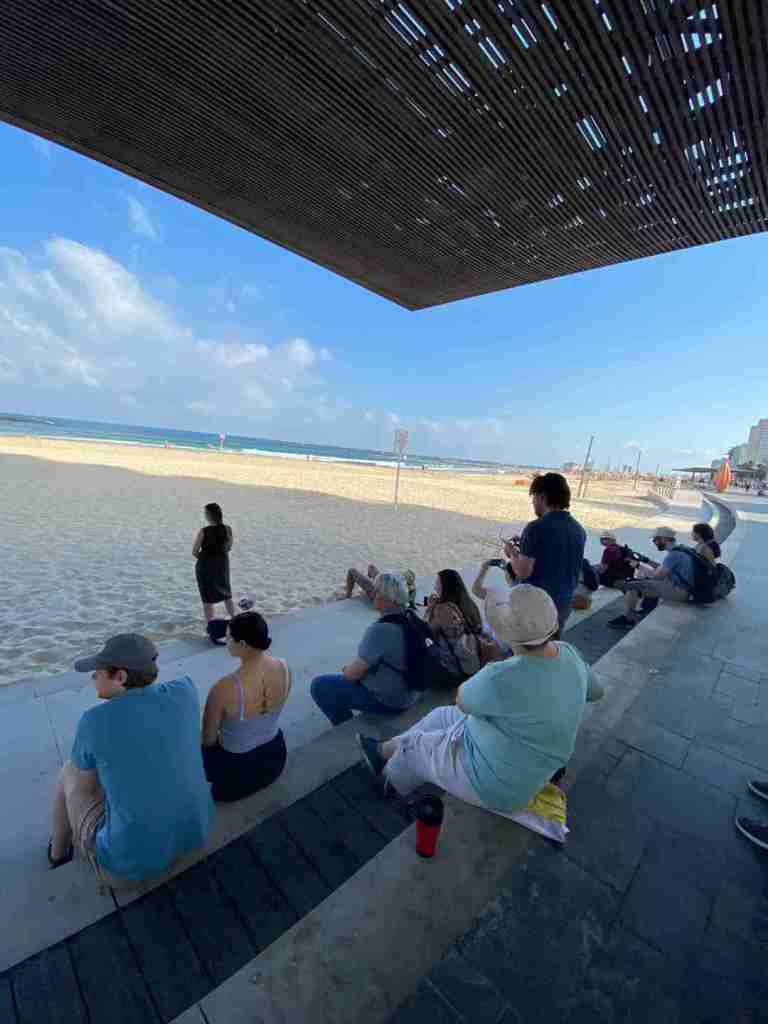
So, it’s appropriate for this newsletter insert, too, as I wish to retell my recent journey to the Holy Land as part of the WUPJ’s Beutel-Bergman seminar. This year’s theme, Startup Progressive Jewish Leadership: From Vision to Reality set the tone for the trip, with participants from South Africa, Israel, Czech Republic, Argentina, Brazil, Australia, Belarus, Russia, the USA and Italy gathering to learn, share and connect in an indescribable way only Israel can achieve.
The 10-day seminar covered everything from issues facing Israel and the diaspora, to building a global community and exploring the progression of, well, progressive Judaism. Organised by WUPJ educators, Rabbi Stacey Blank and Rabbi Shlomo Zagman, we began each morning with a session of prayer and reflection, followed by full days of lectures, tours and no shortage of food.
We met with leaders from the likes of the IMPJ, WUPJ, Hebrew Union College, IRAC and WZO. We heard from a Human Rights lawyer, Bedouin entrepreneurs, and a variety of leaders and rabbis around the country. We were presented with leadership seminars and worked in groups to develop the skills learned and apply them to our personal projects.
On night one, we put our faith in one another as we handed over watches and phones (or anything that could light up) and headed – in a human train – into Na Laga’at Blackout Restaurant, the only dark restaurant in Israel. We sat and chatted, filled our cups (and our souls), got handsy with our food and quickly learned to trust one another’s guidance in and out of the completely blacked-out restaurant. A memory I hope stays with me for a long, long time.
We visited the Anu Museum of the Jewish People, toured the Yitzhak Rabin Center with the legendary Paul Liptz, heard from two women rabbis in the Galilee of their successes and challenges, and broke bread at the whimsical Mijana restaurant in the Israeli-Arab village of Ar’ara and visited Kehilat Yozma school and shul in the beautiful area of Modi’in.
Another highlight was our trek through Neot Kedumim, the only biblical nature reserve in the world, where our guide expertly married nature and the scriptures in the most perfect setting for a lesson in leadership.
By the end of the trip, we’d grown as individuals, strengthened our global family network and came home proud to be part of the World Union and energised to take our personal projects for our communities to a new level. Most magically, I brought home a little something from every conversation and interaction had with each participant.
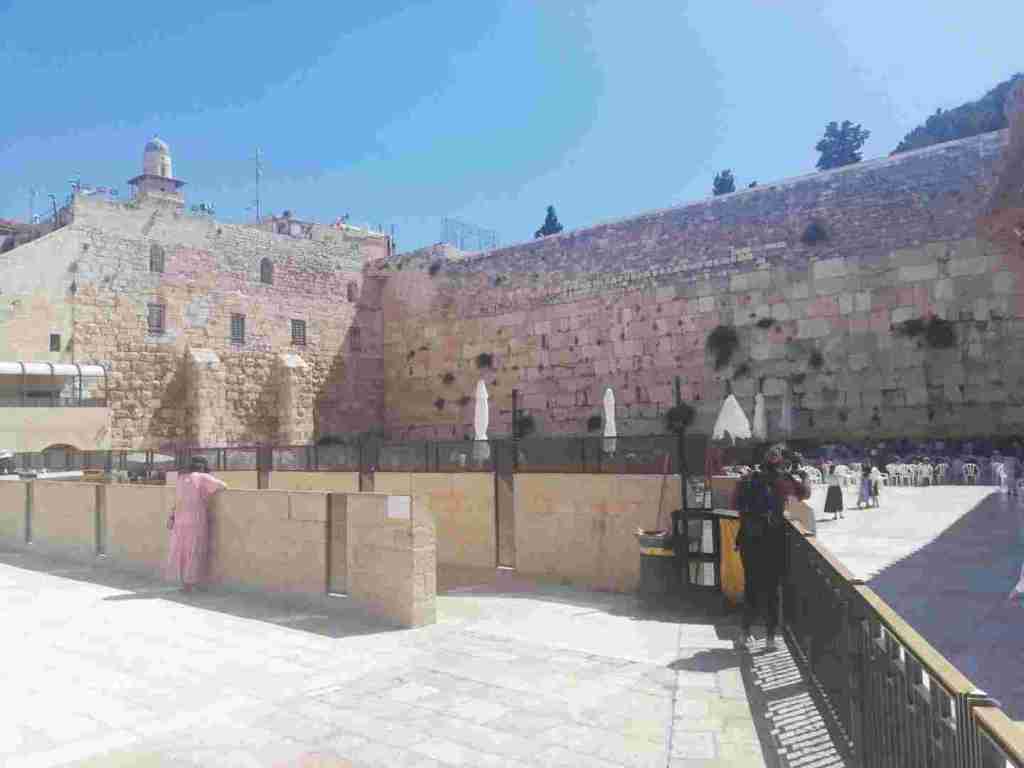
But that’s not all. I was fortunate to spend a few days in Tel Aviv before joining the seminar. I was privileged to meet up with our very own Alan Warshaw, fresh off his own seminars and straight from the highly dramatic morning spent with Women of the Wall at the Kotel on Rosh Chodesh. If it wasn’t for two years on Zoom, we’d never have met, and spending Kabbalat Shabbat at Beit Daniel, the largest progressive shul in Israel, complete with the honour of lighting candles with Alan and meeting MK Gilad Kariv, these memories wouldn’t exist. I also got to spend the day with Rabbi Elena Rubenstein, exploring the astounding Eretz Israel museum and enjoying a delicious lunch with our favourite mother Rabbi.
Parashat Masei isn’t just a slideshow of scenic vacation stops, but a recounting of the miracles experienced in the desert. The journey of the Israelites was divided into segments – each an opportunity to experience Hashem on their journey and, just like with my own trip, we need to relive what ‘was’ in order to get to what awaits.
Most importantly, this week’s portion teaches us that every single step we take in our journey is framed in the reflection of our relationship with the Divine. With every step, we acknowledge Hashem’s presence and participation in our journey.
Our lives are an evolving journey, never quite knowing what we’ll come across between our narrow spaces of Egypt and the Promised Land. It’s in this portion, more so than many others, that the presence of Hashem and the miracles performed are blatantly acknowledged.
The Israelites noted the miracles and shared them by recounting their journey. Let’s do the same. Let’s share our everyday miracles and acknowledge the Source. With Hashem’s support and guidance, I experienced the Holy Land in all its glory; gained a new global family and, I hope, new skills and energy to plough into our movement.
The South African Union for Progressive Judaism (SAUPJ) held its Biennial Conference over the weekend. Not only was it a privilege to spend time with our guest of honour, Rabbi Sergio Bergman, president of the World Union for Progressive Judaism (WUPJ), but as a movement, we gathered to discuss pertinent issues.
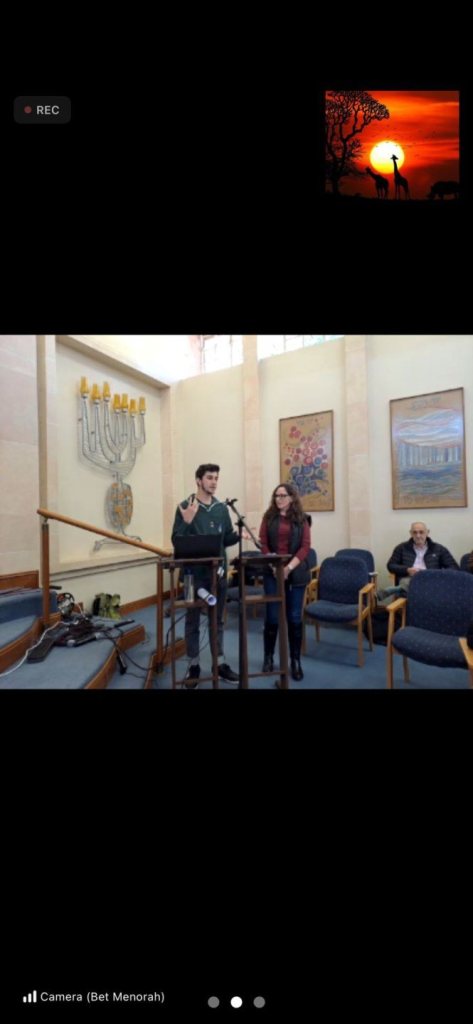
Here is the talk I was privileged to present with South Africa Nezter’s Mazkir, Julian Gordon. There was some diverse and thoughtful feedback – please feel free to share your views in the comments.
Lisa: Julian, how often have you met someone and headed straight online to look them up?
Julian: I’d say often. I usually look for them on Instagram first.
Lisa: Isn’t it an invasion of privacy?
Julian: Finding information through the likes of Google (and other social media platforms) is so common, that it’s now a verb. We Google people.
Julian: Halachically, even though the information is publicly available, it doesn’t mean it may be freely distributed. But there are two areas we need to cover here: idle gossip is prohibited, number one. Number two is privacy amongst neighbours. The Talmud teaches us that “loss of privacy is a kind of damage.” So, we put up walls between our neighbours for privacy.
Lisa: And yet, in the past two years – we’ve been in just about everyone’s living room, dining room, kitchen or study. There are faces we’ve never met, but we know their cat, dog and parrot by name. We know exactly which books are on their bookshelf, or what colour their lounge suit is.
Julian: Torah says “and you shall make for Me a Sanctuary, and I will dwell in your midst.” It’s got to include virtual sanctuaries, right? Or our own homes, I guess, as we log into that Zoom box or YouTube link and the homes we see on screen, too? I mean, don’t we, as progressive Jews, study values and practices online most of the time anyway?
Lisa: Fair point. So, you’re saying it’s not just about online services on Friday night in our slippers, whiskey discreetly placed offscreen?
Julian: Exactly, it’s more than just Zoomagogues
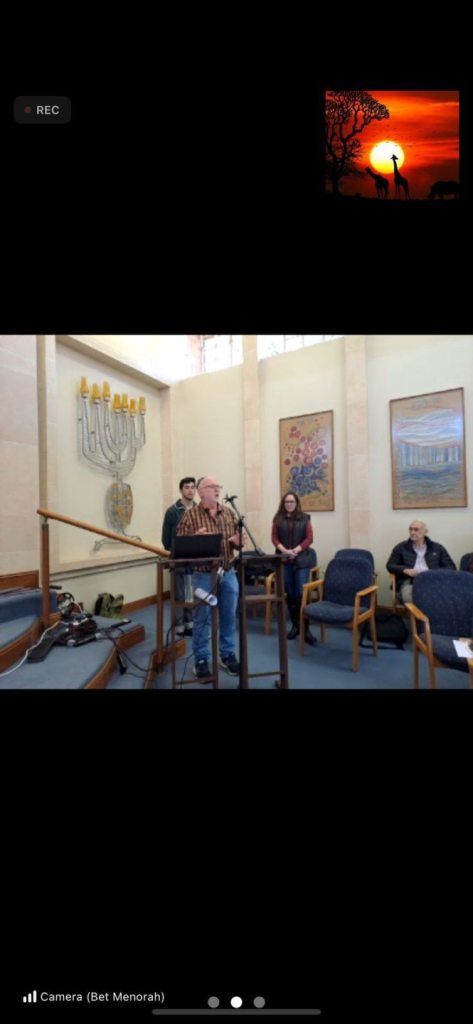
Bet Menorah, Pretoria, South Africa
It’s Not Just About Zoomagogues
Lisa: There are many Jewish business people and along with running a business, comes the marketing and customer communication aspects. But, what if one is Shomrei Shabbat? What if they need to work on this day? And more interestingly, what if your business is not in a Jewish neighbourhood/area so fewer people know you’re not working on Shabbos?
Julian: These are the questions we must ask ourselves, especially in a South African context.
One point I will speak to is the case when a potential client messages a Jewish businessperson on Shabbos. My response is this: it’s really up to you when to respond.
Lisa: Let’s say someone is mobile daily by electric wheelchair and as such, has difficulty moving without it. Can they use their wheelchair the whole week, Shabbat including? (including robot vacuums, Alexa, etc?)
Julian: Isn’t it stated halachically for Shabbat that if a device is already on, it may continue to be used?
Julian: Some turn to tech to feel connected in ways we can control and not be alone.
It’s a feeling we miss from koch-ing with people in real life during the service, the brocha, the Shabbos dinners afterwards etc.
Julian: As Jews, we go through each part of our history just by moving through each challenge. We find ourselves doing that even today, as we’ve adapted to the online space and how it incorporates Jewish practices. We have, and always will, continue to continue.
Bet Menorah, Pretoria, South Africa
Jews Do It Best (Lisa)
We continue to continue – it’s what Jews do best.
Before the advent of satellites and computers, the Jewish people already had the internet, or as I like to call it, Yenta-net, but rather the ancient communication network of exiled people from Germany to Russia, Yemen to India – all speaking one coding language – the Torah.
While the Torah was initially installed at Sinai, you could go so far as to say, we invented portable tech.
It’s no surprise when you think about it. Jews have continued to invent technology for generations. Edwin Land invented the Polaroid camera, and Evelyn Berezi designed the first word-processing computer. Motorola’s Israel Research and Development Centre came up with the original mobile phone technology. Philippe Kahn created the first camera phone. Robert Adler invented the remote control.
And here’s the real humdinger – Larry Page and Sergey Brin, two Yiddish boytjies – developed Google.
But before all of that, Jews invented the original search engine. With the Torah, the average teenager could do a quick mental search on anything from prenups to military strategy, divide it up into mental tabs, categorise it, mentally bookmark it and apply it when needed.
And what if this system crashed? A Jew makes a plan. Everybody, back in the day, had to write their own Torah scroll to carry around with them. It might not have taken selfies, but it certainly reminded them to be their best selves.
It goes to show that the Jewish people are survivors. We’re innovative. We find ways to break out of adversity and come up with different ways to navigate the world.
In an interview with Fast Company magazine, author Richard Worzel notes that “organizations and people succeed based on the quality of their information.”
So, we can say that the success of Jewish people is connected directly to the quality of information. Nowadays, technology spawns technology and not only do we experience Zoom fatigue, but also information overload. Even Moses experienced information overload. We’re taught that he stuttered until he received the Torah.
Think about it for a moment. Moses’s speech impediment meant he just couldn’t find the terms to explain all the links he’d tapped into. He saw the whole picture at once. He was stuck for words. And then came the Torah, cutting up the overwhelming information overload into coherent principles and readable stories. Dare I say that the Torah helped Moses to cut out the clickbait and get down to the most important, relevant tabs.
But just like the internet, Torah is an endless sea of information. Yes, it gave Moses a fluency with which to navigate the Jewish people through G-d’s mind by breaking everything down into bite-size symbols. Once he found his speech, Moses gave the Jews guidelines to cut through the clutter and instead of being redirected to the latest betting site like DreidalBets.com, he helped them arrive at the truth.
According to the Talmud, “when G-d made the world, he looked into the Torah.” He created a world where a Torah makes sense. And that’s what today’s tech is supposed to do – help us cope with reality. As content cascades, we seek systems to clarify the truth, to make sense of the world… to make life easier.
Let’s talk about the advances in biotechnology. It’s something that brings hope to many. We’re living longer than ever before. Cures turn infectious diseases into inconveniences rather than life-threatening illnesses. And Judaism always applauds medical breakthroughs. It’s the number one value, isn’t it: Pikuach Nefesh.
Speaking of which, how many of you have joined WhatsApp or Facebook Tehillim groups? How many of you are on a community or shul broadcast group?
Now, how many of you have, especially since the start of the pandemic, had to help Bobba with her technology?
Well, you can even leave the tech to tech. Elli-Q, a robotic companion created by an Israeli company called Intuition Robotics, is designed to be an ageing companion, keeping the elderly engaged by helping them to access and connect to video chats, social media, online games and all sorts of community services and events. Sure, it’s not designed to be a living, breathing friend or solve loneliness, it can help the elderly overcome barriers and bring people from around the globe together like never before. Robotics can help older adults intuitively interact with technology and connect with their community, content and families.
Today’s technology – a lot of which is Jewish-invented – is supposed to help us cope with reality. Our view of technology is no different from our view of any other aspect of life. Yes, we can perform technological feats, but we still look to the Torah for answers. It is still up to us to decide how to ethically channel our discoveries and when to separate the information overload wheat from the chaff.
Fortunately, we need not wait for the next Window’s update or Microsoft Messiah version 2022. We have the Torah – the ultimate smart technology that helps us to clarify and move through life with crystal-clear focus.
So, halachically, Julian, where do we stand on Zoomagogues and online events?
Julian Gordon & Lisa Hack
The Modern Shul Service (Julian)
a. We now use technology to broadcast Shabbat services. It seems it’s acceptable to use technology at this time of the week because it’s halachically necessary. It allows everyone in the community to join for the most important day of the Jewish week.
Online events are incredibly essential to engaging the community, especially at a time when we can’t have everyone together.
As Netzer, these were vital to keeping relevant during the pandemic.
Technology is allowing participants from around the world to come together.
Despite impersonal and technical characteristics of online events, we can still create meaningful engagement between in-person and online participants in a hybrid situation.
e. Tech has opened up Judaism to people who may not feel comfortable walking into a shul (interfaith relationships, the curious, secular Jews). It allows these people to engage in an online spiritual community.
b. A Jew is transported to Shul in an autonomous vehicle. It’s fine, surely? They’re not doing the work.
g. The opportunity to engage a wider network of people in Jewish experiences online is a revolutionary development.
Twitter Space (virtual audio-only platform where anyone can speak and listen)
Early 2022 synagogue shooting
Writer wasn’t expecting more than two hours of prayer
I mean, we are Jews aren’t we? Isn’t that how we’ve always gone through history. We continue to continue.
SAUPJ Honorary Life President, Steven Lurie
Conclusion/Open for Discussion
Lisa: Thanks, Julian. I couldn’t agree more, we continue to continue. So, let’s take it to the audience for a moment and talk about a few pros and cons of tech in progressive Judaism.
Julian:
1. Significant investment is required for the tech and staffing thereof to produce high-quality live streams. [CON] – what are you doing in your shuls to mitigate these expenses or is it a point you’re currently battling with?
AUDIENCE INTERACTION
Lisa:
2. A multi-access hybrid approach is likely here to stay, curing the loneliness of those who desire a sense of involvement and community. We shouldn’t turn away from our devices, but we should develop a self-aware relationship with them – and with one another. [CON into PRO] For those congregations who use a hybrid approach, what benefits and what downfalls are you experiencing?
AUDIENCE INTERACTION
Julian: But there’s a lovely feeling that the sometimes lack of/disallowal of technology in Judaism provides for us. It’s therapeutic to disconnect (and it’s a good detox)
Julian: Disconnecting lets us cancel out the noise and connect with our soul and Hashem in “real time.”
Lisa: Shavuot is coming up – it’s probably no coincidence that G-d chose a mountainous desert for the Divine revelation – as far from civilization as possible. For people to hear the Divine, it could only happen in a place barren of cultural reference points. No noise. No distraction. Just one-on-one interaction.
A woman I’ve known for some time recently told me she is Jewish. I actually had no idea. She then went on to tell me she is proudly a “bad Jew.” She shunned her traditional upbringing and proudly embraces a fully secular lifestyle. So, why a “bad Jew,” I asked her. She said because every Shabbat morning, I sleep late, I make breakfast and savour it while I catch up on the news or scroll through social media and WhatsApp my friends to see how their weeks were. It’s my favourite day of the week.
I thought about this for a moment and said to her “I hate to break it to you, but you keep Shabbos!”
We read that “on 6 days, work may be done, but on the seventh day, there will be a Sabbath of complete rest – a sacred occasion.”
When this particular lady sets aside her special time every Saturday, to take time for herself and to connect with those around her, whether she realises it or not, she’s keeping the commandment of Shabbat.
In various portions that we gain insight into the true meaning of holiness. The Hebrew word for holiness is Kedushah, which means to set aside or designate as different. It’s the obligation to sanctify space and time by putting aside our daily grind and designate Shabbat as holy.
So, when my friend has a lie-in, catches up on the news and enjoys her breakfast, she’s taking steps towards fulfilling this portion’s vision. She’s making a sacred space.
But what if we bind the values of Torah together – our sanctified time of Shabbat and holy days and all other joyous occasions with setting aside time for those around us, by taking concrete actions to meet other people’s needs?
We’re all stuck in this crazy, busy “trap” called life. When last did you call a friend instead of a text? And how often, when someone asks “how are you?” do you respond with “I’m busy, Crazy busy.” I’m guilty of this.
But what if busyness is really self-imposed? Yes, we may have to work, we may have obligations, voluntary activities and chosen activities to participate in. Maybe we’re anxious that if we’re not busy, we’re failing.
And you know what, we are. We’re failing to sanctify time for others. We’re failing to be holy.
If we consider busy-ness as a status symbol, if busy has become the standard answer to any question – now, more than ever, we need to study Leviticus 23 where G-d speaks to Moses and says “speak to the Israelite people and say to them: these are my fixed times, the fixed times of Adonai, which you shall proclaim as sacred occasions.”
While this is one of the first times we encounter descriptions of the Jewish holiday calendar and various holidays and festivals, every single one of our texts mentions a day of complete rest for each festival. There are relationships and obligations that transcend the every day; they are more important than your Google calendar reminders.
Yes, our time is precious. It is ours. But we do not live in a bubble, no matter what the last few years have been. We live in society amongst our community, and to be holy, I feel, is to contribute time to those around us.
G-d doesn’t introduce the calendar of festivals in a language of time, but rather as relationships – the holiness of setting aside space in your life to connect with what matters, and also who matters. No ghosting. No excuses. To be holy is to show up. To be holy is to be respectful of others’ feelings, time and space. To be holy is to keep Shabbat – even if it means a Saturday morning lie-in and a scroll through Twitter.
According to the Torah, our very existence depends on the actions of G-d. But the Torah teaches us that G-d’s holiness, his/her very presence in this world, depends on us.
There’s a mutual relationship between bearing witness to Hashem’s holiness, and being accountable for our actions. So, what’s the point of a holy G-d if we’re not mirroring that holiness in our lives? Judaism isn’t a religion for the sake of a seat in heaven. If our prayers don’t inspire us to speak up, to support, to unite, to set aside time for things that matter to yourself and your community, then what’s the point?
This week, I challenge you to be even a little more holy for yourself and for others. Just as we sanctify time for Shabbat, sanctify time for someone else.
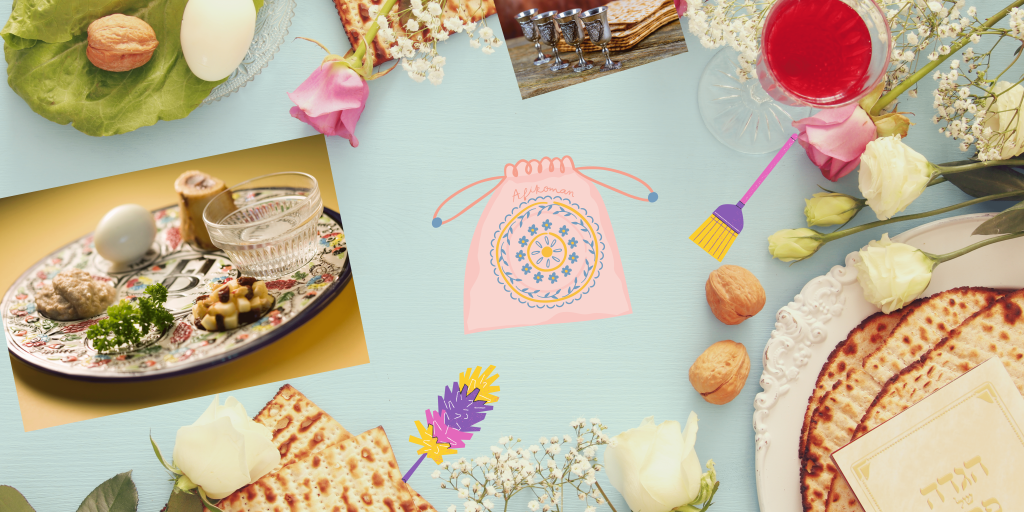
Today is Shabbat Hagadol, the great Shabbat and that means that one week today we will be swimming in matzah and a host of other kosher le’Pesach treats.
It also means it’s time to roll up our sleeves and clean chametz from the home. Think of it as Jewish spring cleaning on a whole other level. It’s intense, but as we rid our homes of the grains forbidden during Passover, we’re also readying our souls for renewed freedom.
We’re not just physically clearing out the chametz, we’re spiritually cleaning and preparing our path for redemption. It’s not something candle and feather alone can achieve. We need to go inwards and realign ourselves with our ethics and values, and then commit to following suit. It’s time to check in with body, mind and spirit and clear away the cobwebs, the negativity, the proverbial chametz.
Amid our Pesach prep, this week we read Parashat Metzora. It’s a portion that talks about leprosy (tzara’at) or, as the Torah describes, an affliction that appears on a person, vessel, clothing or home.
According to the Torah, it’s a plague on a house inflected by G-d, and according to Resh Lakish, it’s a plague afflicted on those who speak lashon hara (gossip). We then learn that there’s a purification ritual to remove this plague and restore the home.
It’s this purification ritual I want to talk about, but not literally in terms of heading to the mikvah with our crockery or immersing in one to cleanse ourselves of “tzara’at.”
Rather, let’s look at this purification as a time to correct faulty behaviours and restore our relationship with HaShem. Let us use this time of cleaning and cleansing as a way to take positive action to create opportunities for nearness to G-d.
In the days leading up to the Israelite’s ending journey, the sacrificial lamb awaited its fate. Shabbat Hagadol is our lamb. It’s our opportunity, in the midst of physical Pesach prep to remember our spiritual preparation as we reflect on this upcoming holiday of liberation.
This year, as we customarily drink multiple cups of wine during the seder, let’s remember G-d’s promises to the enslaved Israelites:
“I will free you… I will deliver you… I will redeem you…I will take you to be My people…”
Each cup of wine symbolises the joy we feel as beneficiaries of these promises. This year, I challenge you to make promises to yourself and the Holy One.
Free yourself from grudges. Deliver kindness. Redeem those by whom you feel wronged. Draw yourself closer to HaShem, and may it be Dayenu (enough).
May this Shabbos be one of meaning and rest, but also one of preparation – for the home in readiness for Passover and for the soul in readiness for freeing yourself from spiritual chametz, and may your preparations be meaningful.















 Nachas & Drash